

Protect Student Health Without Dropping University Grades
The modern university experience is often romanticized as a period of intellectual growth, networking, and self-discovery. However, behind the picturesque campus views and graduation brochures lies a much more demanding reality. Today’s higher education students face an unprecedented volume of academic pressure. Between attending multi-hour lectures, preparing for technical exams, preparing for presentations, and managing continuous essay deadlines, the average undergraduate’s schedule is packed to capacity. The pressure to maintain a high Grade Point Average (GPA) while balancing personal finances, internships, and social lives has turned the typical semester into a grueling endurance test.
Unfortunately, when time becomes a scarce commodity, personal health is almost always the first asset that students sacrifice. Skipping meals, relying heavily on caffeine, and cutting sleep down to four hours a night have become normalized badges of honor in campus culture. This trade-off, however, is unsustainable and counterproductive. When your physical and psychological well-being collapses, your cognitive performance inevitably follows. Protecting your health is not a luxury that you schedule after your homework is finished; it is the foundational requirement for getting those high grades in the first place. For specialized tracks, managing the overwhelming volume of complex paperwork and clinical analysis requires a strategic approach. Utilizing professional resources, such as turning to MyAssignment Services for comprehensive help with nursing assignments, allows students to maintain their academic standings without sacrificing their health. This strategy ensures that future professionals can dedicate adequate time to practical self-care and rest, preventing early career burnout before they even graduate.
The Physiology of Academic Stress
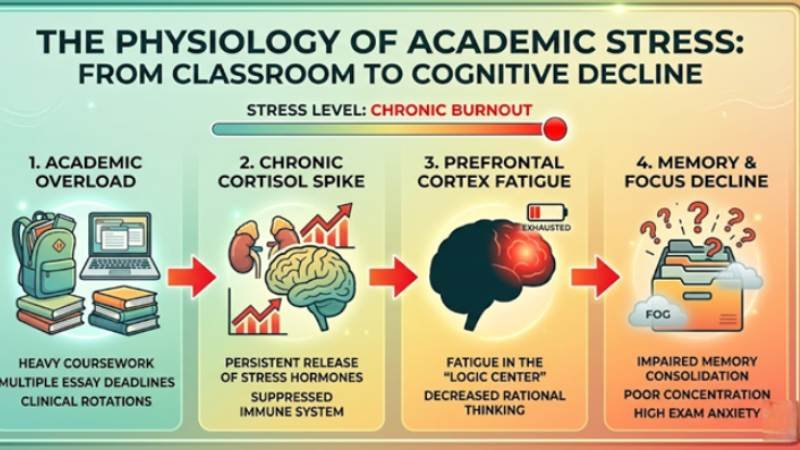
To understand why chronic cramming destroys academic performance, it helps to look at what happens inside the body during prolonged periods of high stress. When you face an intimidating deadline or an incredibly complex exam, your brain perceives this intellectual threat exactly like a physical danger. It triggers the release of stress hormones, primarily cortisol and adrenaline.
[Academic Overload] ➔ [Chronic Cortisol Spike] ➔ [Prefrontal Cortex Fatigue] ➔ [Memory & Focus Decline]
In short bursts, these hormones are highly useful—they increase your alertness and help you power through a late-night study session. However, when these hormones remain elevated for weeks at a time due to back-to-back assignments, they begin to actively work against your brain’s ability to process and retain information.
- Prefrontal Cortex Exhaustion: This is the region of your brain responsible for logical reasoning, critical thinking, and complex decision-making. High levels of cortisol essentially fatigue this area, making it significantly harder to grasp abstract concepts or write cohesive analytical essays.
- Memory Impairment: The hippocampus, which acts as your brain’s filing cabinet for long-term memory storage, is highly sensitive to stress. When you are continuously overwhelmed, your brain struggles to convert short-term study notes into long-term knowledge, leading to the frustrating phenomenon of “blanking out” during exams.
- The Immune System Tax: Chronic stress actively suppresses your immune system. This is why students frequently catch colds, flu, or migraines right around finals week—the exact moment they can least afford to be sick.
The Sleep Dilemma: Why All-Nighters Backfire
The most common tactic for managing a heavy workload is stealing hours away from sleep. “I’ll sleep when the semester ends” is a common refrain among undergraduates. Yet, from a cognitive standpoint, sacrificing sleep to study longer is one of the least efficient strategies a student can employ.
During deep sleep and Rapid Eye Movement (REM) cycles, your brain performs essential maintenance. It flushes out metabolic waste accumulated during the day and runs a process called memory consolidation. This is where your brain replays the data you learned while awake, strengthening the neural connections and turning scattered lecture notes into permanent knowledge. When you cut your sleep short, you interrupt this consolidation process. You might spend six hours reading a textbook at 3:00 AM, but because you only slept for two hours afterward, your brain won’t retain the majority of that data. You wake up with foggy focus, slow reaction times, and an impaired ability to solve unexpected problems on a test paper.
| Sleep Hours | Cognitive Impact | Academic Consequence |
| 7 to 9 Hours | Optimal prefrontal cortex function; full memory consolidation. | High retention, fast problem-solving, stable mood. |
| 5 to 6 Hours | Mild focus drift; reduced abstract reasoning capabilities. | Slower essay writing; higher rates of careless mistakes. |
| Under 4 Hours | Severe deficits in working memory; micro-sleep episodes. | High risk of test anxiety, logical gaps, and rapid fatigue. |
Dietary Habits and Cognitive Energy
What you put into your body directly dictates how well your brain performs under pressure. When deadlines approach, many students switch to a survival diet consisting of fast food, sugary energy drinks, and endless cups of coffee. While these options offer a quick, convenient spike in energy, they inevitably lead to sharp physical and mental crashes.
Refined sugars and simple carbohydrates cause your blood glucose levels to skyrocket, giving you a temporary burst of alertness. Shortly after, your body releases insulin to manage the sugar, causing your energy levels to plummet. This leaves you feeling sluggish, irritable, and completely unable to concentrate on dense reading materials. To maintain stable cognitive energy throughout the day, focus on whole foods that provide a slow, steady release of fuel.
Brain Food Essentials
- Complex Carbohydrates: Oatmeal, brown rice, and whole-grain bread release glucose gradually into your bloodstream, preventing energy crashes.
- Healthy Fats: Foods rich in Omega-3 fatty acids, like walnuts, flaxseeds, and fish, support brain cell structure and improve overall focus.
- Hydration: Even mild dehydration can reduce your concentration levels by up to ten percent. Keep a water bottle on your desk and sip from it constantly while studying.
Actionable Wellness Frameworks for Undergraduates
Balancing a high GPA with great health does not require a complete lifestyle overhaul. Instead, it relies on implementing smart, highly practical systems that maximize your productivity during study hours so you can protect your rest periods.
1. The Pomodoro Technique for Cognitive Pacing
Sitting at a desk for five hours straight without a break is an inefficient way to study. After the first hour, your focus drops significantly. Instead, break your work into manageable intervals: work intensely with zero distractions for 25 minutes, then take a hard 5-minute break to stand up, stretch, or drink water. After completing four cycles, take a longer 30-minute break to clear your mind. This structure prevents cognitive fatigue and keeps your brain fresh.
2. Radical Time-Blocking
Do not leave your schedule to chance. At the start of each week, map out your days in visual blocks. Dedicate specific chunks of time to attending classes, writing essays, exercising, and sleeping. Treat your rest blocks with the exact same level of respect as an exam date. If you know you have a dedicated block for relaxation later in the evening, you will work with much higher focus during your designated study hours.
3. Smart Task Delegation
True time management means recognizing when your workload exceeds the hours available in a day. High-achieving students understand that trying to do absolutely everything yourself at the expense of your mental health is a recipe for failure. Delegating non-essential responsibilities, or working with academic writing services to manage secondary essays, can free up the essential cognitive space you need to focus on your core exams and maintain a healthy, balanced lifestyle.
Frequently Asked Questions
Q.1 How can I stop feeling guilty when taking breaks from studying?
Ans: Remind yourself that rest is an active part of the learning process. Your brain requires downtime to process information and rebuild its cognitive resources. Taking a structured break is not laziness; it is a strategic tool to keep your academic performance high.
Q.2 What is the fastest way to recover from an intense academic crunch week?
Ans: Prioritize sleep stabilization. Go to bed at the same time for three consecutive nights to reset your circadian rhythm. Additionally, step away from digital screens during your downtime, increase your water intake, and engage in light physical activity like walking to lower your cortisol levels.
Q.3 Can physical exercise actually help improve my university grades?
Ans: Yes. Regular cardiovascular exercise increases blood flow to the brain and triggers the release of Brain-Derived Neurotrophic Factor (BDNF), a protein that supports the growth of new brain cells and improves memory. Just 20 minutes of brisk walking a day can significantly sharpen your focus during study hours.
About The Author
My name is Min Seow, and I am an academic consultant and educational content strategist collaborating with MyAssignment Services. With a background focused on higher education trends and student workflows, I specialize in developing actionable performance blueprints that help undergraduate students navigate complex coursework across demanding sectors.